Why Your Area Rug Needs New Padding (And When to Replace It)
If you’re investing in professional rug cleaning, there’s one upgrade you shouldn’t overlook: your rug padding. Often hidden and forgotten, rug padding plays a critical role in protecting both your rug and your floors. Yet most homeowners don’t think about it until something goes wrong — a rug that won’t stop sliding, fibers that wear out prematurely, or mysterious scratches on hardwood floors.
What Does Rug Padding Actually Do?
Quality rug padding serves several important functions that extend well beyond just adding a soft layer underfoot:
- Prevents slipping — Non-slip padding keeps your rug securely in place, eliminating a common tripping hazard
- Reduces wear — By absorbing the impact of foot traffic, padding dramatically extends your rug’s lifespan
- Protects floors — Padding prevents rug backings from scratching hardwood, and stops dye transfer to light-colored floors
- Adds comfort — Even thin padding significantly increases the cushioning feel of your rug
- Reduces noise — Padding dampens footstep sounds — a major benefit in apartments and multi-level homes
- Improves insulation — An extra layer between your rug and floor helps regulate room temperature
Signs Your Padding Needs Replacement
Rug padding doesn’t last forever. Here are the signs that yours is past its prime:
- Your rug slides or bunches — The padding’s grip has worn out
- You can feel the hard floor through the rug — The cushioning has compressed
- The padding is crumbling or sticky — Rubber padding breaks down over time, leaving residue
- Your rug looks more worn than expected — Without padding’s protection, fiber wear accelerates
- You notice a musty smell — Old padding can trap moisture and develop mold
- It’s been 3-5+ years — Even if it looks fine, padding loses effectiveness over time
Choosing the Right Padding
Not all padding is created equal, and the best choice depends on your specific situation:
For hardwood floors: Natural rubber or felt padding that won’t stain or scratch. Avoid synthetic rubber that can leave marks.
For tile and stone: Thicker padding with strong grip, since smooth surfaces make rugs more prone to sliding.
For carpet-over-carpet: Thin, firm padding that prevents the rug from “floating” on the carpet beneath.
For high-traffic areas: Denser, more durable padding that withstands heavy use without compressing.
The Best Time to Replace Your Padding
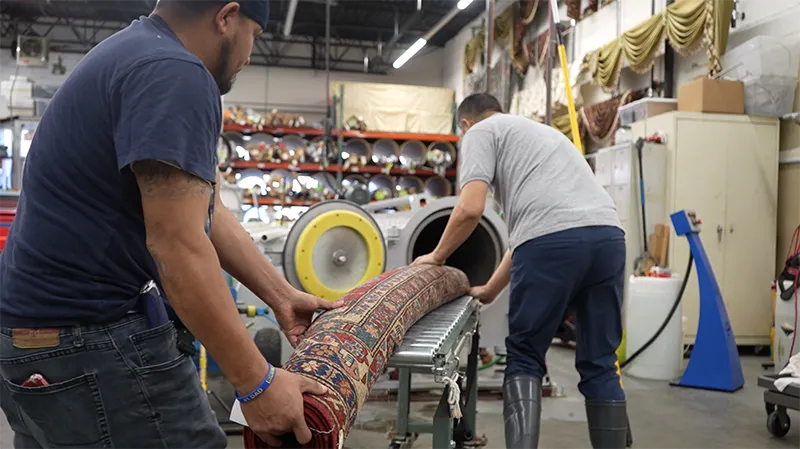
The ideal time to replace rug padding is when you have your rug professionally cleaned. At Residential Rug Care, we custom-cut new padding to your rug’s exact dimensions and roll it together with your cleaned rug. When it arrives home, you simply unroll both together — your rug is clean and your padding is fresh, with zero extra effort on your part.
Ready to upgrade your rug padding? Learn more about our padding services or contact us for a free estimate.